For those who are serious about lawn care, there is an array of tools out there to choose from that can do everything from aerating your lawn to spreading new seeds. Understanding the purpose of each of the garden gadgets is key. You also need to know which features to focus on to buy the right tool for your yard. In this post, we’ll explore some of the top pieces of equipment designed for grass maintenance, and what to consider when buying each tool.
Aerators
Aerators help to relieve compaction by punching small holes in the soil – allowing air, water and nutrients to reach the roots. They’re useful if you’ve got a clay soil yard or a high traffic lawn.
These tools are available in two forms:
- Manual aerators: These look like forks or spiked rollers and are manually operated. They’re a good choice for aerating smaller gardens or targeting specific spots.
- Powered aerators: These use petrol or electricity and are ideal for treating larger boggy gardens. Some also have in-built scarifying features.
Dethatchers
Dethatchers are designed to remove ‘thatch’ – the thick layer of dead grass, roots and debris that can build up on some lawns between soil and living grass. Eliminating this layer can help improve drainage and reduce lawn disease.
You can use a rake to remove this thatch – however purpose-built dethatcher machines make light work of this task. Choose an electric dethatcher over a petrol one for lower running costs and less noise.
Leaf blowers
Leaf blowers are handy tools for clearing leaves, twigs and grass clipping from lawns and patios. As with dethatching, you can use a rake to remove fallen leaves, but leaf blowers speed things up.
Electric models tend to be the best option for smaller gardens – they’re light and quiet. Choose a cordless model if you want extended range. Petrol mowers are more powerful and are more suitable for larger areas, but they’re also heavier and noisier. Consider the fact that some leaf blowers also have vacuum settings for collecting and shredding leaves.
Mowers
Mowers are the most fundamental lawn care tools. Of course, there are many different types of lawn mowers, so you need to consider what is right for your purpose.
Mowers can be divided into three categories:
- Push mowers: These are pushed from behind. Some electric and gas options may have self-propelled settings to make them less strenuous.
- Ride-on mowers: You ride these mowers like a tractor. They’re much more expensive, but an excellent choice for large gardens or fields.
- Robotic mowers: These mowers are autonomous – they use GPS or sensors to navigate your garden on their own. They cost a lot of money, but allow you to put your feet up while your lawn mows itself.
On top of considering how the mower is operated, you need to consider its power source. There are three main ways of powering a mower:
- Manual: Only suitable for smaller lawns or those that want a workout, these mowers don’t have an engine and are physically pushed along. They’re the cheapest, greenest and quietest option.
- Electric: Electric mowers either have to be plugged into an outlet or use a rechargeable battery. Cordless options provide more range, while corded options reduce the need for charging after use.
- Gas (petrol): Mowers that use petrol tend to be more powerful, allowing them to take on slopes and thicker grass more easily. However, they are heavier, noisier and cost more than electric models.
It’s also worth looking out for additional features like height adjustable blades or mulching capabilities. Basic mowers won’t have these features, but higher end ones will. How a lawn mower cuts matters too – rotary mowers can handle bumpier lawns better, while cylinder mowers are better for creating neat stripes on more even surfaces.
Rakes
Rakes are one of the simplest lawn tools, but are very versatile. Spring-tine lawn rakes are the best options for lawn care – they can lift out moss, remove surface thatch and help gather leaves.
Choose a metal rake that is a comfortable length so that you are not stooping. While rakes may require more effort than using electric tools like dethatchers, scarifiers and leaf blowers, they can be kinder on young or very stressed lawns.
Scarifiers
Scarifiers provide a more aggressive solution to moss and heavy thatch than your average dethatcher. They slice into the lawn’s surface to open up the sward.
You should only use scarifiers at the beginning of Spring or in Autumn, as they completely scrape up the lawn. However, in doing so they encourage healthier regrowth – they’re good tools for reviving neglected lawns.
Spreaders
These tools are used to spread seeds or fertilizer onto a lawn. Hand spreading can sometimes lead to patchy results – spreading tools help to evenly spread seeds or fertilizer as you walk.
Many spreaders take the form of buckets on wheels with mower-like handles. Most spreaders are manually operated, but you can buy electric lawn spreaders that may help with even distribution.
Strimmers
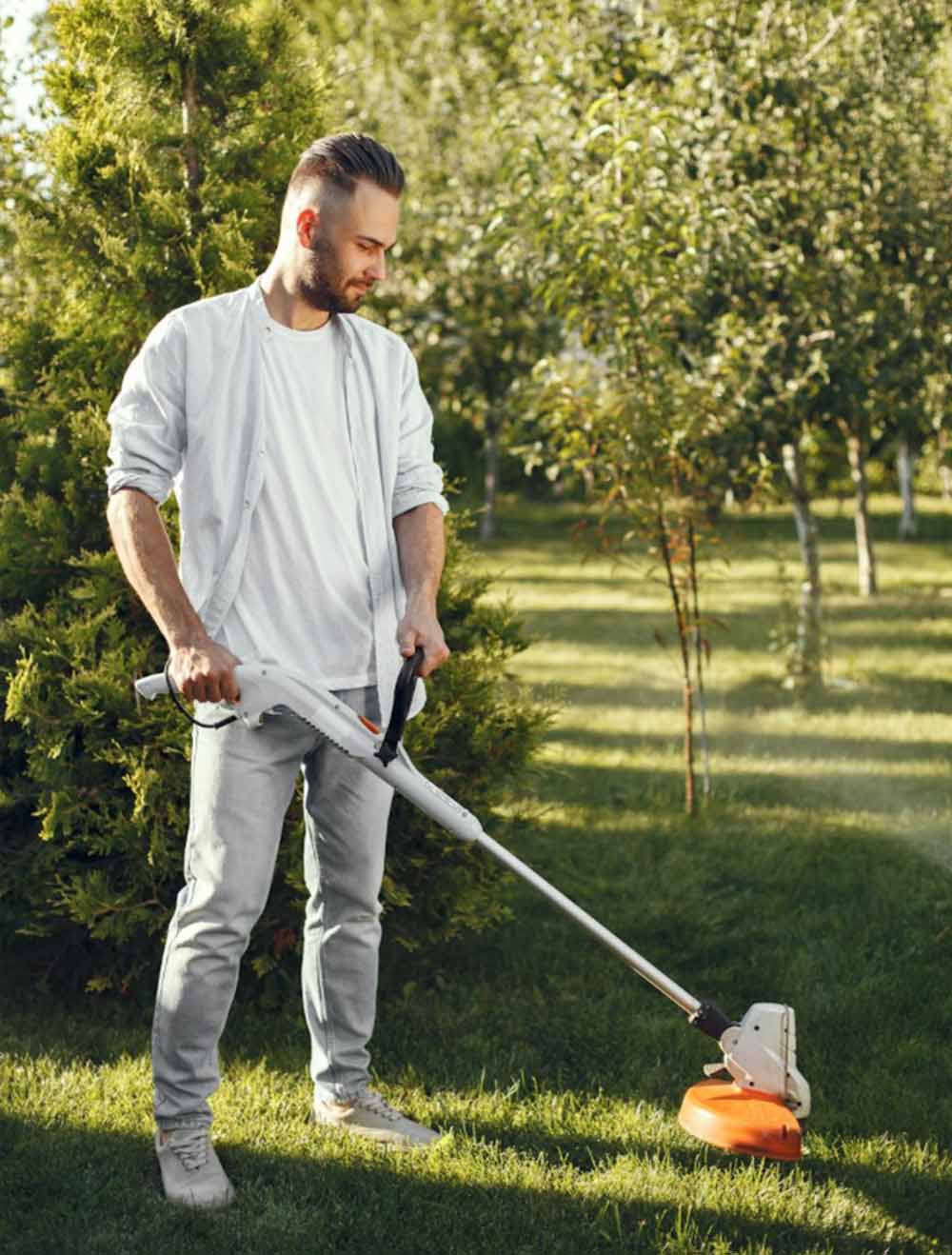
Also known as string trimmers, strimmers are useful tools for tidying up areas where mowers can’t reach. Think lawn edges, grass around trees or turf between stepping stones. They consist of a long pole with a fast spinning nylon line at the end, which is able to efficiently cut through grass or weeds.
As with mowers, strimmers use different power sources. This includes:
- Electric strimmers: These are the most popular types of strimmer. Corded options are good for smaller gardens, while cordless strimmers provide more range and you don’t have to worry about accidentally cutting the cable.
- Gas (petrol) strimmers: These are more powerful and are better suited for large plots. They are heavier and noisier though, so bear this in mind.
Which tools do you need?
You may not need all of the tools on this. It really depends on the size, shape and condition of your lawn. You also need to consider your budget and how dedicated you truly are to achieving a pristine lawn. If you’re just getting into lawn care, stick with the basics, and buy new additional tools as you get more serious.